
January Round-Up
Too much ice on the east coast. Too much ICE everywhere else.

I actually followed through on keeping track of one this for a month! Hoped to get more writing done than I did, but ended up cramming a bunch of prep + notes toward what’ll probably turn into a big sprint through February. Stuff in the works on Andrea Pinotti’s book on the history of immersive images leading up to Virtual reality, Philip Wegner’s Fredric Jameson monographs, and a big piece on Michel Serres, Leibniz, and Deleuze leading into U Minn’s forthcoming translation of Hermes III (and one on Alasdair Gray’s regionalism + a review of Tim Altenhof’s Breath Spaces a little farther out on the horizon).
Currently about halfway through the first volume of Sartre’s phenomenology of group formation in Critique of Dialectical Reason, about a quarter into Ernest Mandel’s Late Capitalism (the economic base that Jameson used to establish Postmodernism as a superstructure), and a third through François Jacob’s “history of heredity,” The Logic of Life. I want to read Wuthering Heights.
I’d be shocked if anyone gives more than a cursory glimpse to list portion of this but shorter stand-out stuff I picked up in Jan. include short fic. from Raegan Bird in Soft Union, Maxi Wallenhorst on the crisis posed by the “crisis of masculinity,” Zachary Loeb’s history of Y2K apocalypticism in Empty Set, Jessica Fletcher’s revisionist read on the 1957 film adaptation of Atlas Shrugged at the New York Review of Architecture, and Jonathan Basile’s I ac for the Oxford Literary Review Supplement.
Fiction:
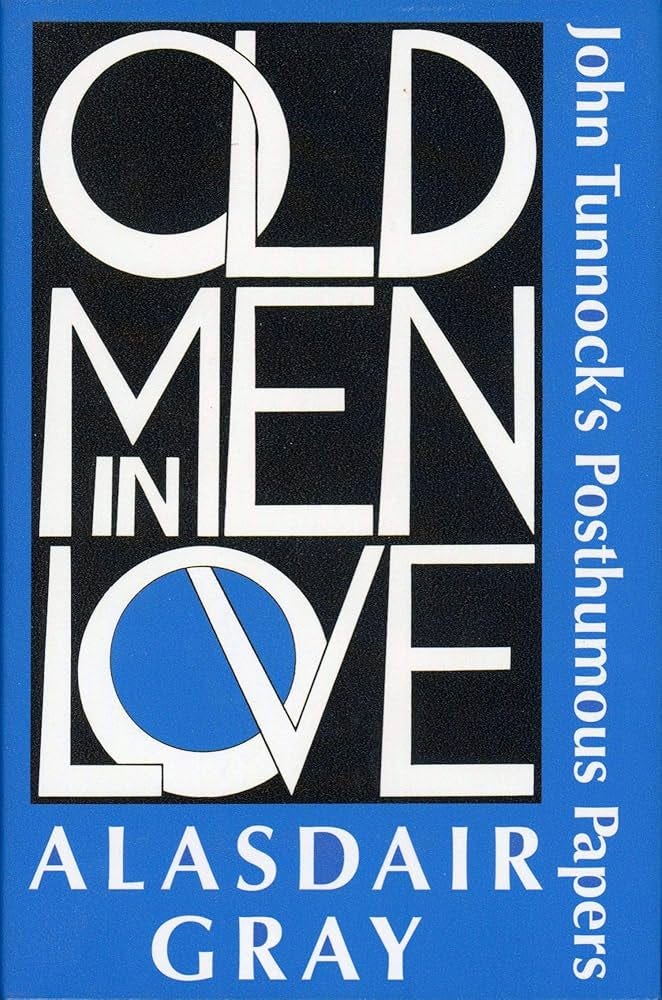
Gray, Alasdair. Old Men in Love: John Tunnock’s Posthumous Papers. 2007. Northampton, 2010.
Loosely stitched together “triptych” comprised of earlier/unfinished stage/television dramas that Gray repurposed as historical novellas following the lives of Socrates, the Renaissance painter Fra Lippo Lippi, and leader of the Agapemonite religious cult Henry James Prince + in keeping with Gray’s past play with frame narrative, set up and tied together as a collection of discovered notebooks and drafts; strong contender for my favorite of Gray’s books (it holds its own against Poor Things and 1982 Janine)
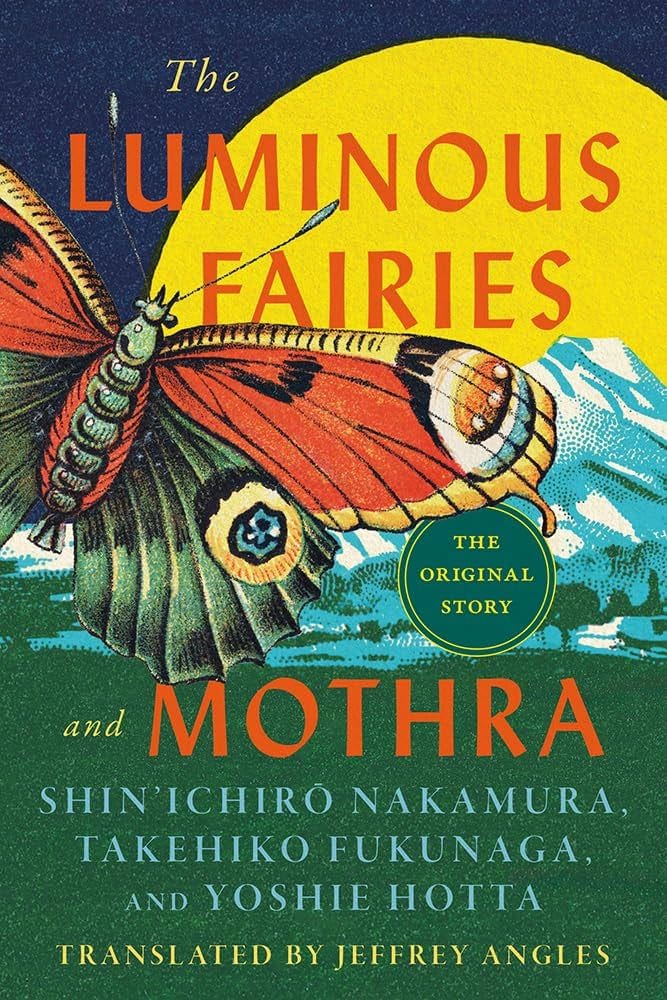
Nakamura, Shin’ichiro, Fukunaga, Takehiko, and Hotta, Yoshie. The Luminous Fairies and Mothra. 1961. Trans. Angle, Jeffrey. Minneapolis: University of Minnesota Press, 2026.
Combo translation of Nakamura, Fukunaga, and Hotta’s co-authored, serially published novella, Mothra and the Luminous Faires + an extended introductory essay by the book’s translator, Jeffrey Angle; the co-authored novella, which originally ran in the Asahi Weekly Supplement, did double duty for the Toho studios’ early run of Kaiju films -- the authors not only plotted out and outlined the narrative for Mathra’s debut film (1961), but also worked as promotional material leading up the to the film’s release. Angle’s follow up essay is a great intro to the Japanese media landscape in the ‘50’s and ‘60’s…covers all three authors’ background + different reasons for dipping into a pulpy/pop culture project after their past work in more serious business capital-L Lit., the ties between Kaiju films and the Anpo protests of 1960, leftist resistance to American imperialism in mid-century Japan, and the cultural significance of major motifs from the film/novella (moths, the Pacific, metamorphosis); really cool little book -- Angle did a similar translation/essay of/on the Godzilla novellas + would love to pick that up as well.
Theory/Philosophy/History:
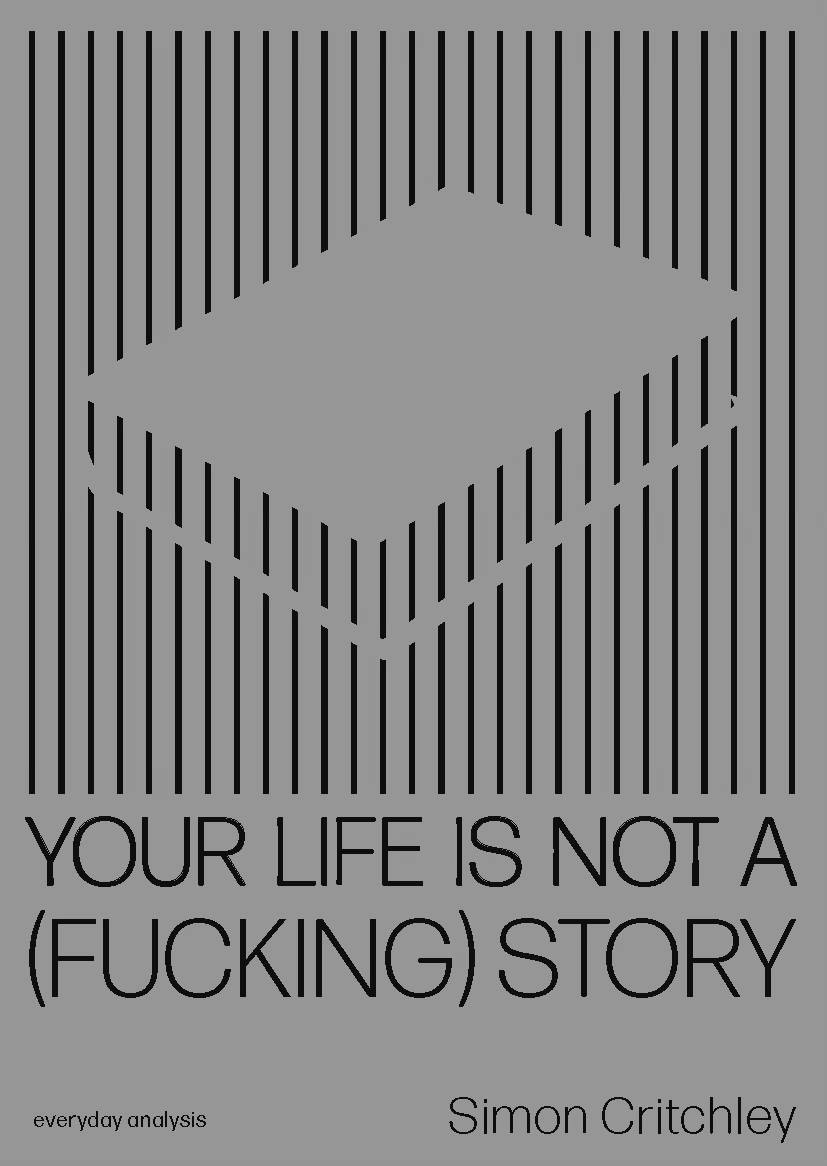
Critchley, Simon. Your Life is Not a (Fucking) Story. Everyday Analysis, 2024.
Brief pamphlet of collected articles by Critchley on our impulse to narrative, David Bowie’s legacy, and Hamlet; could take or leave the Bowie piece…loved Critch on Ophelia + possibility for a better future -- Ophelia’s “Lord we know what we are, but not what we may be” as a better path forward than Hamlet’s “To be or not to be” indecision… “Ophelia holds open the promise of something else. If our reality is suffused with doubt, and doubt kills love, then there is still the possibility of a countermovement to melancholy.”
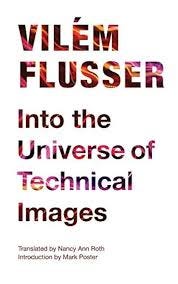
Flusser, Vilem. Into the Universe of Technical Images. 1985. Trans.: Nancy Ann Roth. Minneapolis: University of Minnesota Press, 2011.
Flusser’s 1985 foray into new media begins by dividing what he calls technical images, which are made through technical apparatuses, and traditional ones; by making a ghostly specter of the absent past simultaneous and co-existent with the present, Flusser argues that technical images have upended our experience of time as a tidy, linear progression and pushed us toward what he calls post-history; though he holds to a sort of weird techno-utopianism that bears little resemblance to the tech-optimism of the 2010’s, Flusser also lays out two radically different paths for the future of a society governed by technical images based on the division between discourse (one-to-many, non-responsive distribution of stored information which serves to maintain structures of the status quo) and dialogue (mutual, responsive communication that synthesizes stored information into new knowledge) that he set up in his 1978 book, Communicology; though a culture driven by a dialogic relationship to technical images might pave the way to utopia, one driven by a discursive relationship to technical images, would move “toward a programmed, totalitarian society of image receivers and image administrators;” most of the book works to forecast how Flusser expected discursive and dialogical futures for the tech. image in a handful of different fields including education, art, science, and geopolitics; despite his sharp diagnosis for how technical images would change our relationship to information, knowledge, and memory, Flusser wrongly sees their rise as an inevitable displacement of discourse by dialogue; though it’s easy to read his utopianism as naïve optimism, Flusser does offer a strongly worded and eerily accurate warning for where a mishandling of new media might lead and his hopeful (if misguided) forecast does present a possible alternative for how we might turn new tech toward a better world.
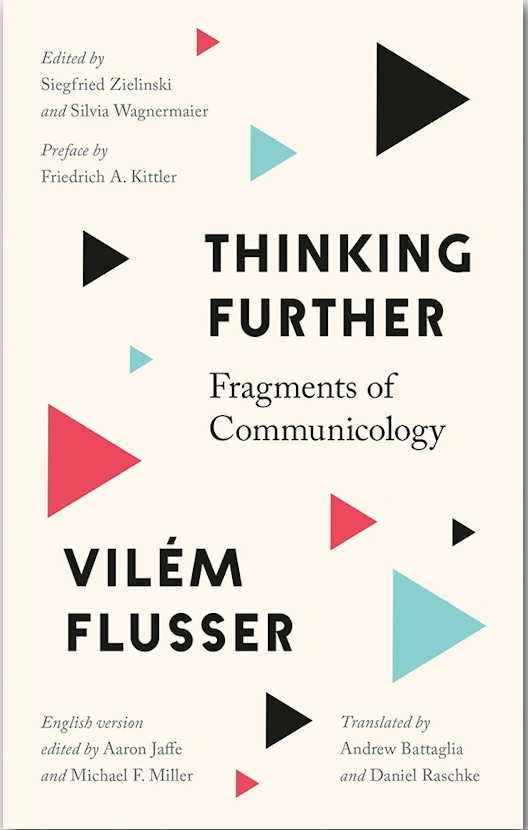
Flusser, Vilem. Thinking Futher, Fragments of Communicology. Ed.: Zielinski, Siegfried, Wagnermaier, Sivlia, Jaffe, Aaron, and Miller, Michael. Trans.: Battaglia, Andrew and Raschke, Daniel. Minneapolis: University of Minnesota Press, 2025.
Series of lectures that Flusser delivered on the rise of technical images at Ruhr University Bochum…great little companion to Communicology and Into the Universe of Tech. Images with a handful of revisions and updates to the previous books
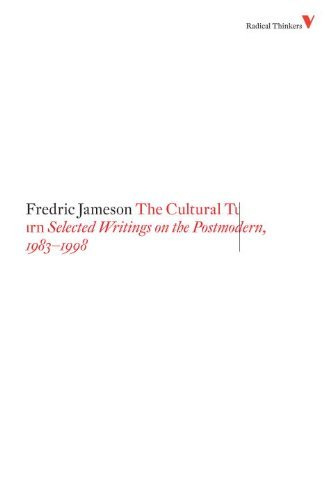
Jameson, Fredric. The Cultural Turn: Selected Writings on the Postmodern, 1983-1998. 1998. London: Verso, 2009.
Collection of Jameson’s essays on po-mo (mostly) written for a broad/general audience; for the most part, a much more accessible version of Postmodernism, or, The Cultural Logic of Late Capitalism, however the book also includes a few deeper probes into economics and architecture that extend the essays from the big book; really enjoyed the ongoing/continued engagement with Manfredo Tafuri…currently chipping away at Ernest Mandel’s Late Capitalism and found FJ’s pieces on Mandel’s economic theory to be very helpful and far easier to parse than the big, meaty chapter from Po-Mo
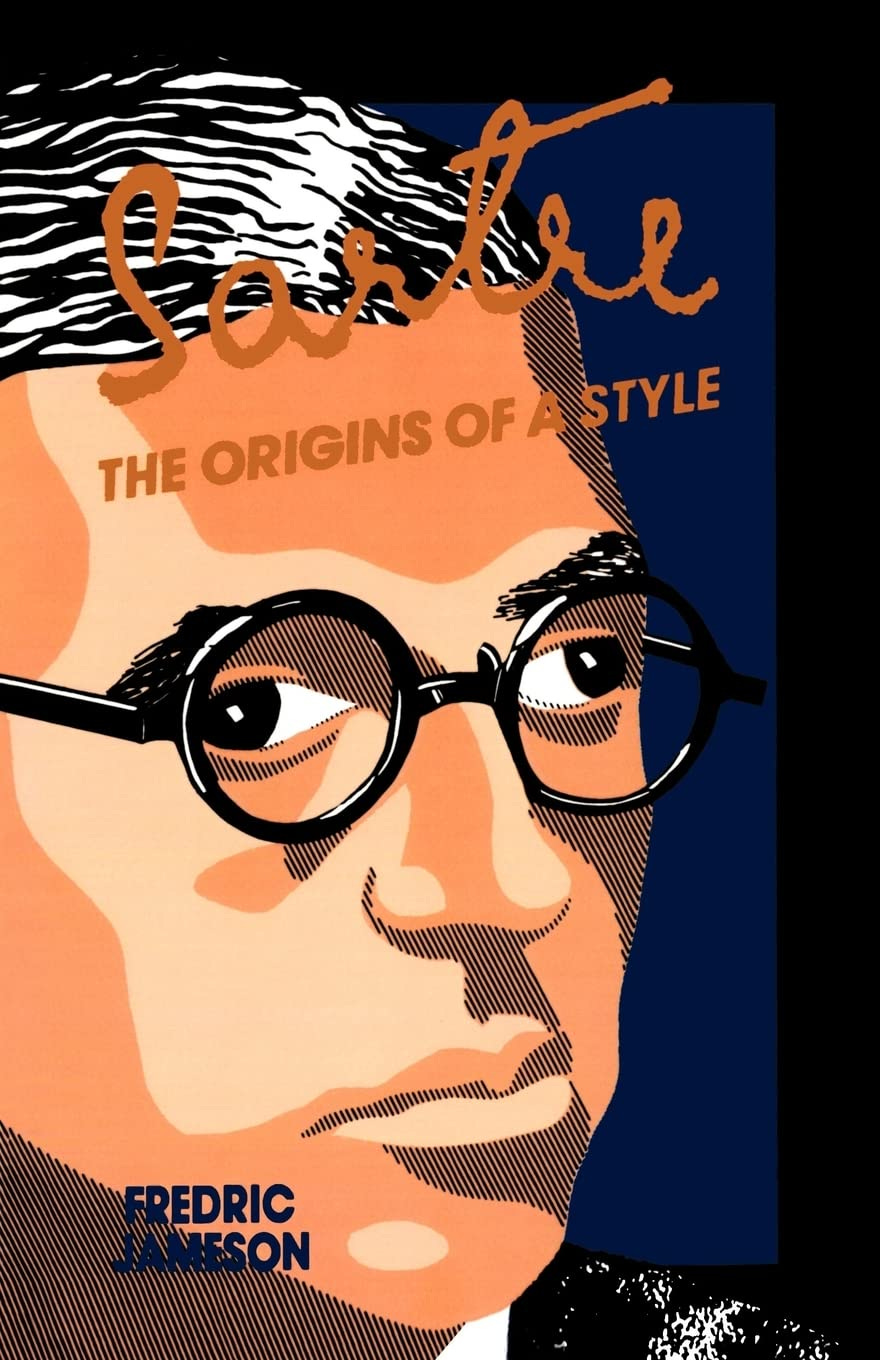
Jameson, Fredric. Sartre: Origins of a Style. 1961. New York: Columbia University Press, 1984.
Very, very, very cool monograh -- both for Jameson’s read on Sartre and for the window it offers into how Jameson’s thought developed; the book is worth reading for that alone; sharp, insightful looks at how the grammatical quirks of Sartre’s novels and plays puts the ideas he lays out in his philosophical writing into practice (as well as a handful of very smart takes on how some of this makes its way into Being and Nothingness); cool read on Sartre as a hinge point between modernism and postmodernism (in a similar vein to Beckett and Nabokov); good stuff on J-PS’s use of fragmented imagery + his play with verb tense; even better stuff on how the text relies on the reader to put all of the broken bits back together; the book grew from Jameson’s Ph.D dissertation…not just written before J discovered French theory, but, as he notes in the afterword, before French theory (at least as we think of it today) could properly be said to exist; quite a few concepts that Jameson continued to develop over the course of his career make early appearances + coming to it after spending so much time with his later thought, the most interesting aspect of the book is watching him wrestle with embryonic kernels of some of his major ideas before developing a complete vocabulary to work through them -- much of his subsequent thought on reification, which drew from later readings of Lukacs, is here as a prototype, as is the work on named emotions and affect that came almost fifty years later in Antinomies of Realism; as an added bonus, much of Jameson’s theoretical/methodical approach at this point was still linked to Spitzer and Auerbach and the book reads much more like a piece of mid-century lit-crit in a similar vein to Frank Kermode or George Steiner -- cool to see a close up, nuts and bolts look at sentence level language from a critic whose reputation I’m used to seeing do bigger picture contextualist/historicist work.
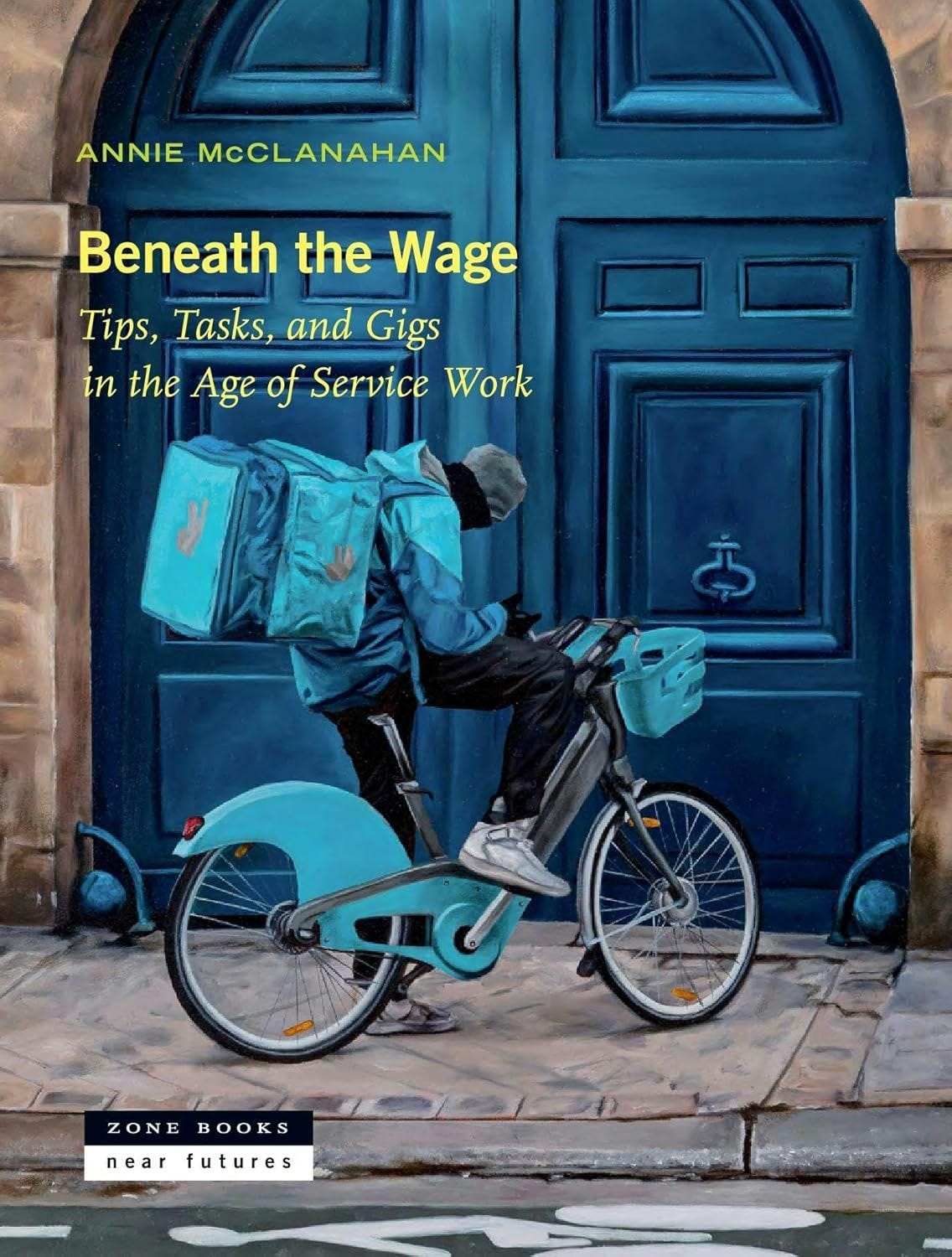
McClanahan, Annie. Beneath the Wage: Tips, Tasks, and Gigs in the Age of Service Work. New York: Zone Books, 2026.
Zone seems to be on a big tear of bangers-only releases in the last few years…I read most of their 2025 catalog last fall and didn’t see a miss in the entire bunch…their spring 2026 lineup looks to pick up where they left off -- their publicist William Pagdatoon kindly passed along review copies of two of their three forthcoming titles along at the beginning of this past January: Breathing Spaces by Tim Altenhof and Beneath the Wage by Annie McClanahan; I’ve had a chance to dip a toe into Altenhof’s history of architectural ventilation, which looks to be nothing but excellent…but blew through McClanahan’s history of wage adjacent tip, gig, and taskwork in a day or two .Currently shopping pitches for a review around to a few outlets (@ any editors, let me know if you’re interested), but in brief, McClanahan includes three long chapters that trace the contours of three alternative payment structures to the conventional hourly wage: tipped work (which allows employers to sidestep hourly wages through supplemental bonuses paid directly from customers to service workers); microwork (which relies on piece-rate payment for completed tasks, rather than a guaranteed, time-based rate), and gig-work (which evades traditionally structured employment through looser, informal contracts that dictate the terms of employment-employer transactions). The last book in Zone’s “near futures” lineup, Quinn Slobidian’s Hayek’s Bastards got quite a bit a press (it was a National Book Critics Circle finalist for 2025) -- this is a strong follow up + will be a big one to watch.
Sartre, Jean-Paul. Being and Nothingness. 1943. Trans.: Richmond, Sarah. New York: Washington Square Press, 2021.
After reading Fredric Jameson’s Marxism and Form, as well as Verso’s transcript of Jameson’s course on French theory and Repeater’s transcript of his seminar on Adorno’s Aesthetic Theory, I’ve been interested in working through a major text by all of the key thinkers who shaped Jameson’s early thought (though I’m hesitant to think of them in terms of “influence” in light of his personal distaste for the term). Currently working through the lineup from M&F -- I hit Marcuse (Eros & Civilization) and Lukacs (History and Class Consciousness), as well as the collection of arguments and essays between Adorno/Brecht/Lukacs/Benjamin/Bloch last month + after lucking into used copies of Lukacs’s Historical Novel and Meaning of Contemporary Realism/reading a few chapters of Bloch’s Spirit of Utopia, fully expected to start this year by continuing with the German/Eastern Bloc cluster of thinkers -- partly due to momentum and partly because of a longstanding fear/intimidation of having to learn an entirely new vocabulary to work through Sartre’s thought, despite a handful of different signs pointing me toward jumping in (Jameson, coupled with the many, many strong claims for him that Hayden White continued to make throughout his career [which went so far as continuing to align himself with J-PS more than the wave of theorists who followed him], Paul Ricoeur’s extension of his early writing on the imaginary in Lectures on the Imagination). Two projects finally prompted me to take the plunge + pick up B&N as background: a joint review of Philip Wegner’s Periodizing Jameson and Late Theory (a pair of monographs on J’s early-career and later work that effectively add up to an excellent two-volume intellectual biography) and a piece on Benjamin Paloff’s existentialist read of Mikhail Bakhtin in Bakhtin’s Adventure (something I’d been curious about since seeing Gary Saul Morson and Caryl Emerson cover the common ground between Bakhtin and Sartre in Creation of a Prosaics while I was in grad school). Wanted better handle on the difference between Sartre’s rift between interior and exterior consciousness + the ever-present background radiance of J-PS’s thought in Jameson’s work…expected to read a few key/selected passages, tell myself I’d pick at the book over the course of the next few months, and never actual get around to it. Ended up blowing through the whole thing in one big gulp.
Far too little space here to go into the big takeaways + keep yr eyes peeled for the Wegner/Jameson + Paloff/Bakhtin pieces down the road but God damn…coming to that after spending as much time as I have with post-45 fiction feels like finding out about finding out about the Bible after spending a decade and a half with Chaucer and Mallory. Very, very impressive how well even the more technical/jargon-heavy portions of the book actually lift off the page/how well J-PS managed to fly off into metaphysical rigor + deep end history of philosophy before bringing things back to earth…and also Really amazing how deeply Sartre’s managed to penetrate into broader culture.
Sartre, Jean-Paul. Existentialism is a Humanism. 1996. Trans.: Macomber, Carol. Ed.: Kulka, John. New Haven: Yale University Press, 2007.
Revisited as a supplement to B&N -- as great a little piece as the title essay is, it’s really a shame that it seems to have come to stand as a one-off manifesto for Existentialism; taken in its proper context, EIAH does quite a bit to clear up easy/popular misconceptions about Sartre’s broader project, but as a standalone piece, it ends up looking pretty thin -- taken by themselves, a lot of the provocative claims that he makes in the essay can sound a bit like A.J. Soprano during his Nietzche phase…most of them are actually pretty hard fought points that he did put in the work to earn elsewhere; one of the more embarrassing/regrettable things I can remember from my late-20’s period of having read enough to feel way smarter than I was while I was still very, very stupid was talking to a friend and describing Vonnegut as “postmodern YA” for high school kids and college Freshman as a pit-stop between the kids’ table and moving on to sitting with the adults (“training wheels for Pynchon and Gaddis” 🙄) -- I’d sorta consigned Sartre to a on-ramp role for young-adults to pass through the A.J. Soprano phase before moving on to Bachelard before snidely giggling about how Levi-Strauss put Existentialism to bed forever and picking up trendier/later-20th c. French thinkers like Derrida/Foucault/Deleuze. Couldn’t have been more wrong about Vonnegut, couldn’t have been more wrong about Sartre + for anyone leaning that way -- take a look at what Deleuze’s essay “He was my Teacher” for a good look at how much of an indisputable heavy hitter Sartre was/how radically he opened up the field for what it was possible for philosophers to do in the 20th century.
Also the essay on Camus that’s included in the Yale edition is brilliant and goes a long way toward correcting the limp, pop culture conception of Existentialism -- excellent choice on the editors’ part to include it
Wegner, Phillip. Invoking Hope: Theory and Utopia in Dark Times. Minneapolis: University of Minnesota Press, 2020.
Read as further background for the in-progress piece on Wegner’s Jameson books; overall, a great collection of short essays defending literary studies, academia, and critical theory without withdrawing into ivory tower hermeticism or the priest-class snobbery that Hayden White cautioned against in “The Absurdist Moment of Literary Criticism;” not entirely sure I’m sold on how well the overarching argument that Wegner tries to make holds together across the essays, but as individual pieces, everything here is rock solid; PW’s play with Alain Badiou’s fourfold “truth procedures” might be enough to purge the longstanding bad taste that Badiou’s left in my mouth + also loved his application of semiotic squares + growing more convinced that Wegner’s done more than anyone since Jameson to extend and develop Greimas’s thought; always enjoy seeing Kim Stanley Robinson getting his due from within the academia…and I was kind of pleasantly knocked off my feet by Wegner’s really kind of strikingly beautiful piece on 50 First Dates
Essays & Standalone Chapters
Deleuze, Gilles. “Philosophy of Crime Novels.” Desert Islands and Other Texts, 1953-1974. 2002. 1968. Cambridge: Semiotext(e), 2006. 81-85.
Guattari, Felix. “Introduction: Logos or Abstract Machines.” The Machinic Unconscious: Essays in Schizoanalysis. 1979. Trans.: Adkins, Taylor. Los Angeles: Semiotext(e), 2011. 9-22.
Jameson, Fredric. “The Uses of the Verb to Be {Sartre}.” The Years of Theory: Postwar French Thought to the Present. New York: Verso, 2024. 23-38.
Jameson, Fredric. “Reification or Otherness {Sartre}.” The Years of Theory: Postwar French Thought to the Present. New York: Verso, 2024. 39-57.
Lawrence, D.H. “Christs in the Tirol” 1912. The Bad Side of Books. Ed.: Dyer, Geoff. New York: New York Review of Books, 2019.
Lawrence, D.H. “Review of Death in Venice by Thomas Mann” 1913. The Bad Side of Books. Ed.: Dyer, Geoff. New York: New York Review of Books, 2019.
Lawrence, D.H. “The Poetry of the Present” 1919. The Bad Side of Books. Ed.: Dyer, Geoff. New York: New York Review of Books, 2019.
Sartre, Jean-Paul. “A Fundamental Idea of Husserl’s Phenomenology: Intentionality.” We Have Only This Life to Live: The Selected Essays of Jean-Paul Sartre, 1939-1975. Ed.: Aronson, Ronald, and Van Den Hoven, Adrian. New York: New York Review Books. 2013. 3-6.
Sartre, Jean-Paul. “Drieu La Rochelle, or Self-Hatred.” We Have Only This Life to Live: The Selected Essays of Jean-Paul Sartre, 1939-1975. Ed.: Aronson, Ronald, and Van Den Hoven, Adrian. New York: New York Review Books. 2013. 44-46
Sartre, Jean-Paul. “On John Dos Passos and 1919.” We Have Only This Life to Live: The Selected Essays of Jean-Paul Sartre, 1939-1975. Ed.: Aronson, Ronald, and Van Den Hoven, Adrian. New York: New York Review Books. 2013. 7-16
Sartre, Jean-Paul. “On the American Working Class.” We Have Only This Life to Live: The Selected Essays of Jean-Paul Sartre, 1939-1975. Ed.: Aronson, Ronald, and Van Den Hoven, Adrian. New York: New York Review Books, 2013. 92-114.
Sartre, Jean-Paul. “On The Sound and the Fury: Temporality in Faulkner.” We Have Only This Life to Live: The Selected Essays of Jean-Paul Sartre, 1939-1975. Ed.: Aronson, Ronald, and Van Den Hoven, Adrian. New York: New York Review Books, 2013. 17-25.
Ricoeur, Paul. “Fiction (4): Models.” Lectures on Imagination. Ed.: Taylor, George H., Sweeney, Robert D., Amalric, Jean-Luc, and Crosby, Patrick F. Chicago: University of Chicago Press. 159-163.
Serres, Michel. “Descartes Translated into Statics Language: The Circle.” Hermes III: Translation. Minneapolis: University of Minnesota Press, 2026. 101-106.
Serres, Michel. “Leibniz Retranslated into Mathematical Language.” Hermes III: Translation. Minneapolis: University of Minnesota Press, 2026. 107-158.
Serres, Michel. “Translations of the Tree.” Hermes III: Translation. Minneapolis: University of Minnesota Press, 2026. 1-31.
Serres, Michel. “Life, Information, Second Law.” Hermes III: Translation. Minneapolis: University of Minnesota Press, 2026. 32-65.
Vonnegut, Kurt. “A New Dictionary.” Welcome to the Monkey House. 1968. New York: Dial Press, 2006. 118-124.
Vonnegut, Kurt. “Where I Live.” Welcome to the Monkey House. 1968. New York: Dial Press, 2006.1-6.
In Progress:
Indiana, Gary. Resentment: A Comedy. 1997. Pasadena: Semiotext(e): 2017. p. 50
Jacob, Francois. The Logic of Life: A History of Heredity. 1973. Trans.: Spillmann, Betty E. Princeton: Princeton University Press, 2022. 1-130
Mandel, Ernest. Late Capitalism. 1975. New York: Verso 2024. 1-156.
Sartre, Jean-Paul. Critique of Dialectical Reason, Vol 1. 1960 Trans. by Sheridan Smith, Alan. London: Verso, 2004. p. 1-405.
Everything Else
Short Fiction:
Bird, Raegan. “Taste Test.” Soft Union Online. January 6, 2026
Lem, Stanislaw. “Les Robinsonades.” A Perfect Vacuum. 1971. Trans.: Kandel, Michael. Chicago: Northwestern University Press, 1999. 1-31
Melville, Herman. “The Piazza.” The Piazza Tales. 1856. New York: Penguin Books, 1986. 47-66.
Kafka, Franz. “Investigations of a Dog.” 1922. The Complete Stories. Ed.: Glatzer, Nahum N. Trans.: Muir, Willa and Muir, Edwin. New York: Schocken, 1977. 278-316.
Suzuki, Izumi. “My Guy.” Hit Parade of Tears. 2014. Trans.: Bett, Sam, Boyd, David, O’Horan, Helen, and Joseph, Daniel. New York: Verso, 2022. 1-24
Suzuki, Izumi. “Trial Witch.” Hit Parade of Tears. 2014. Trans.: Bett, Sam, Boyd, David, O’Horan, Helen, and Joseph, Daniel. New York: Verso, 2022. 25-46
Vonnegut, Kurt. “Harrison Bergeron.” Welcome to the Monkey House. 1968. New York: Dial Press, 2006. 7-14.
Articles (Scholarly):
Barnes, Jasper. “Character, Genre, Labor: The Office Novel after Deindustrialization.” Post45 Journal. Issue 1, January 2025.
Brown, J. Dakota. “American Graphic Design in the 1990s: Deindustrialization and the Death of the Author.” Post45 Journal. Issue 1, January 2025.
MacIntosh, Josh. “Painful Repetition: Service Work and the Rise of the Restaurant Novel.” Post45 Journal. Issue 1, January 2025.
Winter, Yves. “What is an Imaginary?” Critical Inquiry. Volume 52, Number 2. Winter, 2026
Articles (Reviews & Gen. Interest):
Ali, Tariq. “Abduction in Caracas.” New Left Review Sidecar. January 6, 2026
Arn, Jackson. “At Last, No Shrugs.” New York Review of Architecture. Number 49, December, 2026.
Basile, Jonathan. “Generalized Bastardy: Evolutionary Science, Neoliberalism, and the Far Right.” Oxford Literary Review Supplement. May 19, 2025
Brown, Lauren Lexa. “The Sincerity Drought.” Haloscope. January 3, 2026
Del Valle, Gaby. “The Myth of Woke Capital.” Lux Magazine. Issue 14, Fall 2025.
Diehl, Travis. “Libra Season.” Spike Art Magazine. November 26, 2025.
Dewitt, Helen. “Your Name Here: The Secret History.” Helen DeWitt (Substack). January 3, 2026
Durand, Cedric. “After AI.” New Left Review Sidecar. January 15, 2026.
Fletcher, Jessica. “We Built this City.” Schartau, Eric. “Catty Canal.” New York Review of Architecture. No. 46-47, May-August, 2025. 45-46.
Del Valle, Gaby. “The Myth of Woke Capital.” Lux Magazine. Issue 14, Fall 2025.
Geuss, Raymond. “Politics of Impunity.” New Left Review Sidecar, January 7, 2026.
Gratton, Peter. “The Hell Without End: Neoliberalism and the Grift Society.” Oxford Literary Review Supplement. Dec. 8, 2025.
Grimstand, Paul. “Maximally Perverse Obscurantism: On Michael Lentz’s Schattenfroh.” The Baffler. January 29, 2026.
Iosefescu, Mark. “The Aesthetics of Resistance.” The Whitney Review of New Writing. No. 5, Spring/Summer 2025. 12-13.
Kilston, Lyra. “Machines of Floating Grace. LA Review of Architecture, Number 2, October 1.
Hatherly, Owen. “High Standards.” New Left Review Sidecar. January 21, 2026.
Loeb, Zachary. “Apocalypse When.” Empty Set. Issue 1, December 30, 2025.
Romm, Jake. “To Have and Have Nantes.” New York Review of Architecture. No. 46-47, May-August, 2025. 51-53.
Schartau, Eric. “Catty Canal.” New York Review of Architecture. No. 46-47, May-August, 2025. 36.
Simpson, M.P.S. “Objects of Desire: On Treatment Menu’s Eros.” Haloscope, December 22, 2025.
Semley, John. “Infinite Jest is Back. Maybe Litbros Should Be, Too.” Wired. January 30, 2026.
Stewart, Jude. “How to Choose Your Perfume: A Conversation with Sianne Ngai and Anna Kornbluh.” Paris Review. March 23, 2022.
Wallenhorst, Maxi. “‘The Crisis of Masculinity’ Crisis.” e-flux Journal. Issue 159, December 2025.
Zamora, Daniel. “Useful Fictions.” New Left Review Sidecar. December 5, 2025.
Zechner, Dominik. “Powers of Reading, by Peter Szendy.” Oxford Literary Review Supplement. Aug. 11, 2025.