
𝓒𝔂𝓷𝓲𝓬𝓲𝓼𝓶 𝓪𝓷𝓭 𝓟𝓸𝓼𝓽𝓶𝓸𝓭𝓮𝓻𝓷𝓲𝓽𝔂
𝒫𝓉. 𝟣 -- 𝒞𝓎𝓃𝒾𝒸𝒶𝓁 𝒫𝓇𝒶𝑔𝓂𝒶𝓉𝒾𝓈𝓂

Some things are artificial, and some are authentic. It easy to tell when something is artificial. The other is harder.
Rachel Cusk, The Bradshaw Variations
A garden gnome is no longer a garden gnome.
-Peter Burger, “Aporias of Aesthetics”
BetterHelp wants you to start living a happier life, as of today. Go to betterhelp.com, forward slash, Sammy, and join over 2 million people who have taken charge of their mental health.
-Sammy “The Bull” Gravano, betterhelp.com ad read
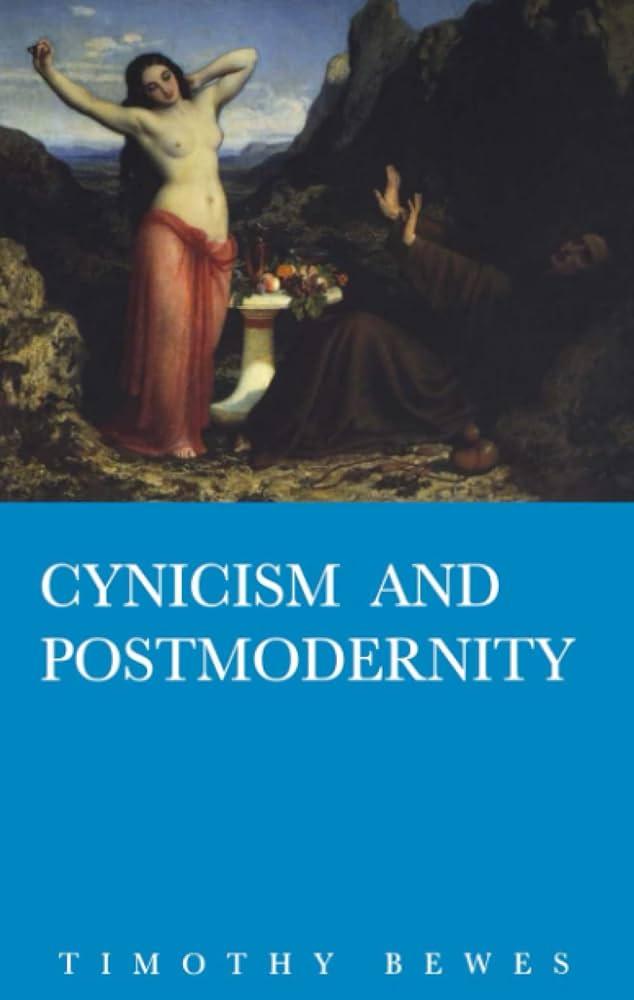
𝒩𝑜𝓉𝑒: Though I teased this as a quick review of Bewes’ book, to be followed up by character studies, I got a bit carried away with the review itself — it grew to be a bit unwieldy. In the name of digestibility, I’ll be breaking it up into a multi-part review before moving forward.
Links to subsequent pieces below:
𝓚𝓮𝓵𝓿𝓲𝓷𝓲𝓼𝓶 ~𝓸𝓻~ 𝓟𝓻𝓪𝓰𝓶𝓪𝓽𝓲𝓬 𝓒𝔂𝓷𝓲𝓬𝓲𝓼𝓶
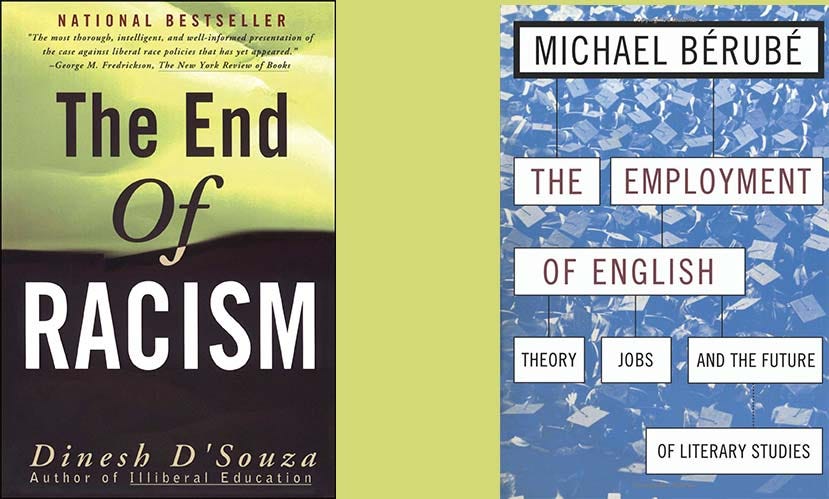
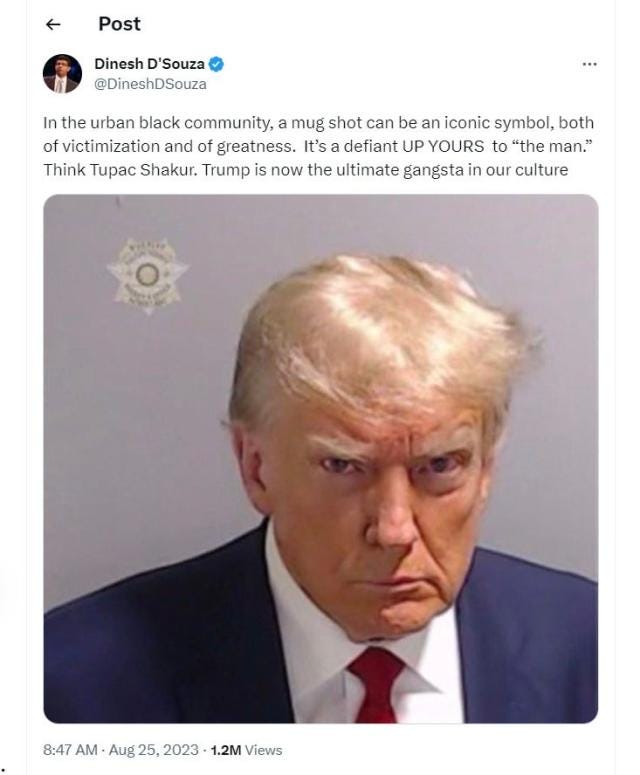
In response to the 2023 release of former President Donald Trump’s mugshot, conservative political commentator Dinesh D’Souza tweeted that, “In the urban community, a mug shot can be an iconic symbol, both of victimization and of greatness. It’s a deviant UP YOURS to ‘the man.’ Think Tupac Shakur. Trump is now the ultimate gangsta in our culture.” Setting aside the obvious issues with D’Souza’s Tweet, it is also worth considering that, throughout 1990’s, D’Souza spent a considerable amount of his career dismissing the needs of the “urban community” and writing off complaints about “the man” as “black cultural pathology” (D’Souza 24). Running directly counter to his praise for Trump as a “deviant” anti-hero, one akin to Tupac, in his 1995 The End of Racism, D’Souza bemoans scholarly refusal “to acknowledge the pathology of violence in the black underclass” and dismisses federal jobs’ outreach to “underclass blacks with their gold chains, limping walk, obscene language, and arsenal of weapons” as “unrealistic, bordering on surreal” (504). Rap itself, according to the D’Souza of ‘95, is a low-brow art form; “leading African American figures[’]” embrace of rap as “the embodiment of black authenticity” risks lending credence to the boogieman of cultural relativism. The “urban community” fares little better: “historically, whites have used racism to serve powerful entrenched interests, but what interests does racism serve now? Most whites have no economic stake in the ghetto” (554). The D’Souza of today, both in his policy positions and in his stance as a right-wing culture warrior, remains consistent with the D’Souza of yore. Politically, his views on structural racism and cultural relativism have not changed, despite his willingness to don the cultural aesthetics of the underclass “gangsta.” The irresolvable tension between D’Souza’s policy positions and his cultural expression is a both product of postmodernity and an act of cynicism.
Timothy Bewes’ 1997 Cynicism and Postmodernism navigates the shaky discursive terrain that makes room for figures like D’Souza to be, as Michael Berubé laments, “taken seriously” (Berubé 212). Contemporary cynicism, as distinct from the classical cynicism of Diogenes of Sinope, is marked less “by a refusal to engage with the world” than by a “disposition of antagonism towards it” (Bewes 1, emphasis mine). His genealogy of the term digs deeper than the conventional, commonsense understanding of cynicism as pessimistic inclintion. Rather, it is a cultural acedia akin to the fatalistic “blackpilled” withdrawal from society common to online incel discourse. Bewes ties it to a “tendency to capitulate to reality, rather than hazard oneself in the political project of defining and reconstituting reality;” it “appears in the space left empty by the mass cultural retreat from politics itself” (3). Faced with a postmodern condition that flattens aesthetic, cultural, and political distinctions into relativistic fungibility, the postmodern cynic throws up his hands: cynicism is a “melancholic, self-pitying reaction to the apparent disintegration of political reality” that results from the endless process of reification “where a series of essentially metaphysical insights is taken to be a declaration of truthy about the nature of political reality” (7). Reified consciousness, pushed to such a heightened degree, leads to a frantic search for a lost sense of wholeness. Cynics who do not throw in the towel altogether fetishize authenticity, courting “metaphysical harmony and personal integrity,” while also raising the bar for such harmony and integrity to such a degree that it remains forever out of reach. The climate of postmodern cynicism is one that fosters indecision and inaction. To retreat into quietude in the face of “impossibility,” to substitute the cultural for the political, to endlessly seek compromise in incommensurable positions, or to narcissistically turn one’s energy toward the contemplative search for inner integrity, for Bewes, are all manifestations of postmodern cynicism.
However, depending on one’s personal disposition, the evacuation of authenticity may also prove liberating. Shaking off the yoke of integrity makes room for a crude pragmatism that “simply refuses to confront the logical or moral niceties of specific situations in order to safeguard the possibility of subjective agency” (44). So released from nagging ethical concerns, figures like former editor of the Sun newspaper, Kelvin MacKenzie, embrace “temperamental amnesia” as a strategy for action (44). Peter Chippendale and Chris Horrie describe MacKenzie’s editorial approach: “On the Sun – and in tabloids in general – it was as if you had caught someone messing around with your wife. You shouldn’t stop to think about it. You just did what you thought was right and went round and punched them in the face” (quoted in Bewes 44). Bewes calls such an aversion of the melancholy cynic Kelvinism (after Kelvin MacKenzie). The Kelvinist acts, and he does so with “verve and panache” — with a complete disregard for “sensitivity to the delicate constitutions of others” (45). Seen from this perspective, however incoherent, D’Souza’s Tweet about President Trump’s mugshot, an Kelvinistic willful ignorance tout court, is not aberrant, but entirely consistent with the greater postmodern discursive ecology.
Michael Berubé, who, dedicates a chapter of his 1997 The Employment of English to a review of The End of Racism, spends pages dispatching factual inaccuracies, pulling his hair out over favorable reviews in mainstream outlets, before concluding that “there are no rightward boundaries for what conservatives will consider acceptable public discourse […] so long as it promises to underwrite federal commitments to justice” (Berubé 215). He is entirely correct – if only in descriptive terms. Set against the backdrop of postmodernity, Berube’s critique loses its force as critique. In limiting the scope of his critique to the cynical pragmatism of figures like D'Souza fails to address cynical pragmatism as such. It is for a similar reason that critiques that underline the incongruence between President Trump’s personal religious conviction (or even his personal conduct) and his appeal to the religious right fall flat. From a Kelvinist perspective, Trump’s integrity does not matter if he can consistently deliver favorable legislation. Likewise, D’Souza’s committed positions on crime, gangs or race are irrelevant – he cashes in by appropriating semiotic shorthand for rebellion when it is convenient. Medium blogger Dwayne Wong points out that Tupac’s “music and message have nothing to do with Trump, who is a wealthy white man who has only ever known a sheltered life of privilege and luxury” (Wong). This does not matter. Handwringing over the congruence of his private affairs and public policy, to the cynical pragmatist, is naïve. Berubé ends his review of The End of Racism with a plea for “the requisite soul-searching on the right” (Berubé 215). Though he also announces that he is “not holding [his] breath” (he was right not to do so), Berubé’s indictment of conservatives’ integrity misses the forest for the trees. D’Souza’s Kelvinism, as much now as in 1997, opportunistically capitalizes on the contemplative passivity of a critics such as Berubé, naively mired in “the ethical and epistemological tangles of rationalistic debate” (44).